Dermal fillers: how much is too much?

Updated: Oct 8
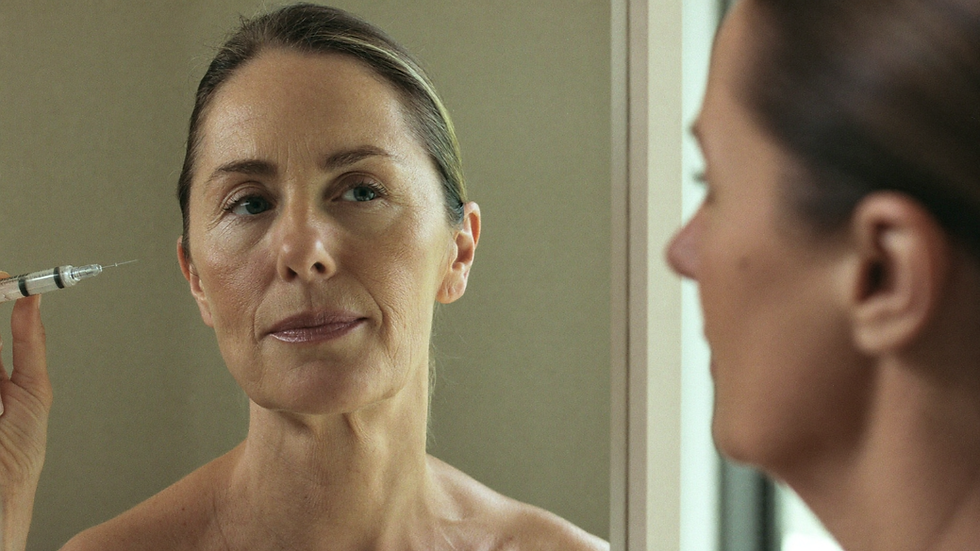
Most people come to a consultation asking how much filler they need. Almost nobody asks how much is too much. It is the more useful question, because overfilling is rarely the result of one appointment. It happens gradually, across years, in amounts that each seemed reasonable on the day.
What overfilling actually is
Facial overfilled syndrome is the clinical term. A narrative review published in Clinical, Cosmetic and Investigational Dermatology in April 2026 sets out three mechanisms behind it. The first is anatomical: the volume placed exceeds what the tissue in that area can carry. The second is biomechanical: product sitting in the wrong plane restricts normal muscle movement, so the face protrudes or flattens oddly when it animates. The third is cumulative: new filler is added before the old filler has gone.
The result is a look most people recognise without being able to name. Cheek contours that sit too high and too flat. An upper lip that reads as one shape rather than two. Eyes that look crowded. A face that has stopped moving the way it used to.
Why it creeps up on you
The single most important fact here is that hyaluronic acid filler lasts longer than the marketing suggests. The same review cites MRI studies finding filler still present up to 27 months after injection, and ultrasound detecting material more than seven years later. A manufacturer's stated duration describes how long the visible effect tends to last, not how long the gel remains in the tissue. So if you top up every twelve months because it feels like it has worn off, you may be adding to a base that never fully left.
Hyaluronic acid also binds water. That is largely the point of it, but it means the volume sitting in the tissue is not fixed at the amount injected.
And the mirror is a poor instrument for gradual change. The 2026 review lists aesthetic perception bias, shaped partly by repeated exposure to a particular look on social media, as a contributing factor in its own right. A face changes slowly enough that every individual step looks normal to the person living in it.
The signs worth paying attention to
Your face looks different when you smile than it does at rest, in a way you did not intend. This one matters, because assessing a face only at rest is specifically named in the review as a contributing factor to overfilling. Movement is where the problem shows first.
People say you look well, or tired, or different, and cannot say why.
You are being offered more product for a concern that more product did not fix the last time.
Areas that used to be distinct have merged: the boundary between cheek and lower eyelid, or between the upper lip and the skin above it.
How we try to avoid it
We assess faces in movement, not only at rest. We ask what has already been placed, where and when, and we treat that product as still present unless there is reason to think otherwise. We space treatments so that we are not building on an unknown base, and we compare photographs over years rather than appointment to appointment.
We also decline. Used well, filler restores structure that has genuinely been lost, and the outcome can be very good. Used to chase a concern it was never going to fix, it makes things worse in a way that is slow and expensive to reverse. Where the real problem is skin quality rather than lost volume, thin, crepey or dull skin usually responds better to skin boosters and bioremodelling than to structural product. Getting that distinction right is most of the work.
Who should not have more filler
Anyone who cannot give a reliable account of what has been injected before, where and when, at least until that has been properly assessed.
Anyone whose concern is sagging or descent rather than lost volume. Filler placed to lift heavy tissue adds weight to it.
Anyone with an active skin infection at the intended site, or who is unwell.
Anyone taking medication that affects bleeding or immune response, until we have gone through it with them.
Anyone whose expectations do not match what filler does. If the distress about an area is out of proportion to what we can see, more treatment is unlikely to resolve it. We will say so, and suggest a different kind of support.
Anyone under 18. In England it has been a criminal offence since 2021 to give cosmetic fillers, or a prescription treatment for expression lines, to someone under 18 for cosmetic reasons.
If you think you have already been overfilled
Hyaluronic acid filler can be broken down with a prescription enzyme. It is a genuine option and it can work well, but it is not a neutral undo button, and it deserves an honest description.
In the UK that enzyme is not licensed for dissolving cosmetic filler, so it is used off label with informed consent. The Aesthetic Complications Expert Group guideline reports local allergic reactions in roughly 0.05 to 0.69 percent of cases and urticaria or angioedema in under 0.1 percent, with anaphylaxis as the serious concern. It recommends an intradermal test dose before non-emergency use, and treats a history of bee or wasp sting allergy as a relative contraindication. The enzyme also does not distinguish between the filler you want gone and the filler you would rather keep, and the tissue underneath will have aged in the meantime. This is a considered decision, not a quick fix, and it needs a face to face assessment first.
Where UK regulation currently stands
It is worth knowing that non-surgical cosmetic procedures in England are still not comprehensively regulated. The Department of Health and Social Care published its response to the licensing consultation in August 2025, proposing a risk-based scheme in which the highest risk procedures, including dermal filler augmentation, would be restricted to qualified regulated healthcare professionals working in CQC registered premises. As of mid 2026 that scheme remains at proposal stage. Until it arrives, the work of asking who is treating you, what they are using and what happens if something goes wrong falls to you.
Serious complications from hyaluronic acid filler are uncommon. A retrospective study of 290,307 injections published in Annals of Plastic Surgery in 2025 reported severe complications in 0.0041 percent of cases. That is reassuring, but it describes acute events such as vascular occlusion and infection. Overfilling is a different problem: it is not an accident, it accumulates, and it is very largely preventable by the person holding the syringe.
If you are unsure whether you have had too much, or you are being offered more and would like a second opinion, our consultations are free, last 30 minutes and carry no obligation to book anything. We will look at what is there and tell you honestly what we think. Sometimes that answer is to leave it alone for a year.
If that is where you are, you can book a free 30 minute consultation online, or read more about dermal fillers in East Finchley first.
Lines that form when you move are usually not a job for filler. Book a consultation for lines and wrinkles, where a prescription treatment for expression lines is discussed. We will tell you which suits you.
Written by the clinical team at Nova Beauty Clinic.


Comments